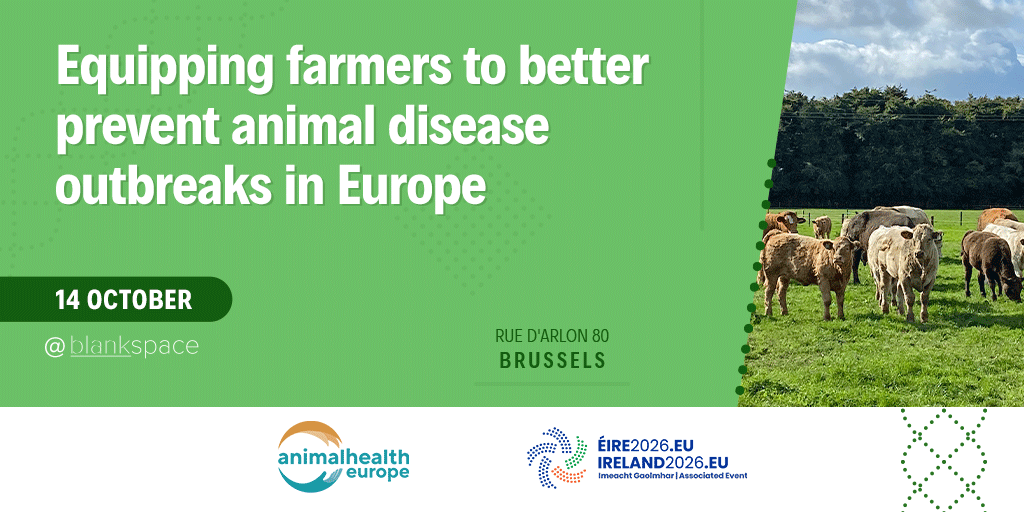
Equipping Farmers to Better Prevent Animal Disease Outbreaks in Europe
Brussels
14 October, 9:00-13:00
Animal disease outbreaks are placing increasing pressure on Europe’s livestock sector, threatening food security, farm livelihoods, animal welfare, and rural communities. As disease risks continue to grow, prevention has become more important than ever. The recently published EU Livestock Strategy talks about ensuring adequate financing for the prevention, surveillance, control and eradication of animal diseases, encouraging the adoption of digital technologies to improve animal health and welfare, supporting a wider and science-based use of preventive vaccination. So, how can the EU ensure that these commitments translate into measurable improvements in disease prevention on the ground?
This Irish Presidency associated event will consider the EU Livestock Strategy and explore how farmers can be better equipped with the knowledge, tools, and support needed to strengthen biosecurity, improve disease surveillance, and adopt preventive animal health practices that reduce the likelihood and impact of future disease outbreaks.
Bringing together farmers, veterinarians, policymakers, researchers, and animal health experts, our event will highlight practical solutions and innovative approaches that can help build more resilient farming systems and ensure timely preparedness across the food chain. Discussions will focus on the role of vaccination, veterinary advice and targeted investment in preventive measures, and will examine how more joined up agricultural and animal health policies can support farmers in managing emerging disease threats more effectively.
Programme
Opening address: Donal Callaghan, Irish Farmers Association
How to better equip farmers for disease prevention:
- What does the animal health toolbox have to offer? – Joseph Harvey, animal health sector business journalist
- How can vets support farmers with preventive health advice? – Nancy de Briyne, Executive Director FVE
- How does EU policy support farmers with disease prevention measures? – Francisco Reviriego Gordejo, Head of Unit Animal Health, DG SANTE
Building on the momentum of the EU Livestock Strategy: prioritising prevention
Panelists:
- Donal Callaghan, Irish Farmers Association
- MEP Billy Kelleher, European Parliament
- Nancy de Briyne, Executive Director FVE
- Rob Kelly, AnimalhealthEurope President
Closing remarks: Lajos Bognár – WOAH Sub-Regional Representative for Brussels